If your dog turns the house upside down the moment you leave, barks the street awake, or wets the floor when it never does in front of you, you are probably dealing with something more serious than bad manners. Separation anxiety in dogs is one of the most misunderstood problems I see, and one of the most distressing, for the dog and for you.
Here is the honest starting point. This is not your dog being naughty, spiteful or getting one over on you. It is genuine panic. Once you understand that, you stop punishing a frightened animal and start actually helping it. Let me walk you through what is really going on and what works.
What Separation Anxiety in Dogs Actually Is
Separation anxiety is a genuine distress response to being left alone. The dog is not bored and looking for something to do. It is in a state of panic, the canine version of a full blown anxiety attack, and it cannot switch that off any more than a person mid panic can be told to calm down.
The tell is the trigger. A dog with true separation anxiety comes apart specifically when it is separated from its people, or one particular person. Put a camera on it and the distress usually starts within minutes of the door closing, not an hour later out of boredom.
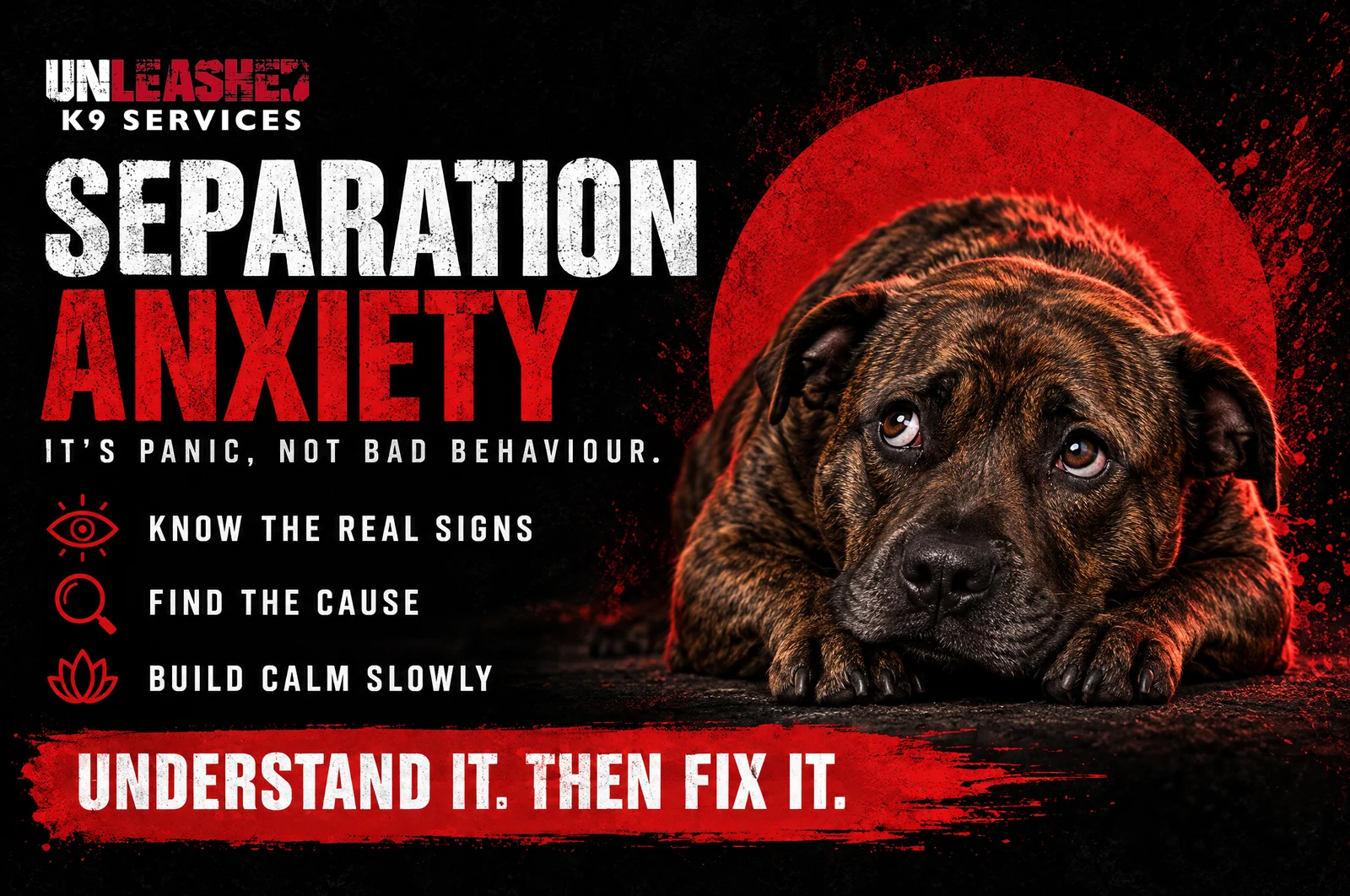
This is not misbehaviour. It is panic, and panic responds to conditioning, not correction.
Anxiety, Boredom or a Lack of Training?
Plenty of dogs chew, dig and bark when left, and it is not always anxiety. Getting the diagnosis right matters, because the fix is completely different.
- Boredom or under stimulation: a fit, under exercised dog with nothing to do will find its own entertainment. The chewing is casual, spread around the house, and it settles once its needs are met.
- Lack of training: a dog that was never taught to settle alone will protest, but it is frustration and habit, not terror. It calms down relatively quickly.
- True separation anxiety: frantic, focused distress that does not ease. Damage clusters at exit points, and the dog often will not eat, drink or rest until you are back.
The Real Signs of Separation Anxiety
The clearest picture comes from a camera. Set your phone up, leave, and watch the first fifteen minutes. The signs of real distress are hard to miss.
- Destruction focused on doors, windows and the spot where you left, not random chewing
- Persistent barking, howling or whining that starts almost as soon as you go
- House soiling in a dog that is otherwise clean and toilet trained
- Drooling, panting and pacing, sometimes puddles of saliva
- Refusing food or a favourite chew the entire time it is alone
- Frantic greetings that go well beyond a normal happy welcome
One or two of these on an odd day may be nothing. The pattern, every single time you leave, is what points to anxiety.
Common Causes of Separation Anxiety
There is rarely one single cause, but the same themes come up again and again in the dogs I work with.
- Over attachment: a dog that follows you room to room and is never allowed to be apart from you never learns that alone is safe.
- Poor early independence: pups that were never taught to settle on their own struggle badly with it later.
- A change in routine: a return to the office after a long stretch at home, a house move, a new baby or a bereavement in the home.
- Rehoming: rescue dogs that have already lost one home can find every departure genuinely frightening.
What Does Not Work, and What Makes It Worse
Before the fix, let me clear the myths, because the usual advice often makes things worse.
Getting a second dog rarely fixes it.
Punishment for the mess teaches fear, not calm.
Flooding, leaving them to cry it out, deepens the panic.
A second dog is the big one. People assume company is the answer, but a dog panicking about losing its person does not settle because another dog is in the room. More often you end up with two anxious dogs. Punishing the mess is worse still. You come home, tell the dog off, and all it learns is that your return is unpredictable and frightening, which feeds the very anxiety you are trying to fix.
The Approach That Actually Works
Real progress comes from teaching the dog, slowly and on purpose, that being alone is safe and boring. It is not glamorous and it is not quick, but it is what holds.
- Build genuine independence: reward the dog for settling in its own space while you are home. Stop the room to room shadowing. Calm distance every day is the foundation.
- Gradual absence conditioning: start with seconds, not hours. Step out, come back before the dog worries, and slowly stretch the time so you never tip it into panic.
- Meet the needs first: a properly exercised dog with its brain worked is far easier to settle. A tired dog rests. A wired one cannot.
- Keep departures and arrivals calm: no big emotional goodbyes, no fussing the second you walk in. Coming and going should be a non event.
- Manage while you train: as far as you can, avoid leaving the dog longer than it can cope with, whether that is a sitter, daycare or help from family. Every full blown panic sets you back.
Severe Cases, the Vet and Realistic Timescales
I will be straight with you. Treating separation anxiety in dogs is rarely a two week job. Mild cases can turn around in a few weeks of consistent work. Severe cases, the dogs that self harm, break through doors or injure themselves trying to escape, often take months of patient, structured effort.
For those severe cases, get your vet involved early. Some medical conditions mimic anxiety and need ruling out, and for genuine, severe panic your vet may suggest medication that takes the edge off enough for the training to land. That is not a cop out. Used properly, it is welfare first.
Getting Real Help
If any of this sounds like your dog, do not sit on it, and do not let anyone tell you the dog will grow out of it. The earlier you build a proper plan, the faster you get your dog, and your evenings, back. Our separation anxiety training is built exactly for this, and for more complex cases it sits alongside wider behaviour modification work. Get the diagnosis right, put the structure in, and stay consistent. That is what turns it around.